
WardIQ
Ward operations, patient by patient.
The problem this solves The information that tells you how a ward is really doing sits in different places: bed state in one system, observations in another, discharge plans in notes and conversations. Assembling it takes time nobody has at eight in the morning.
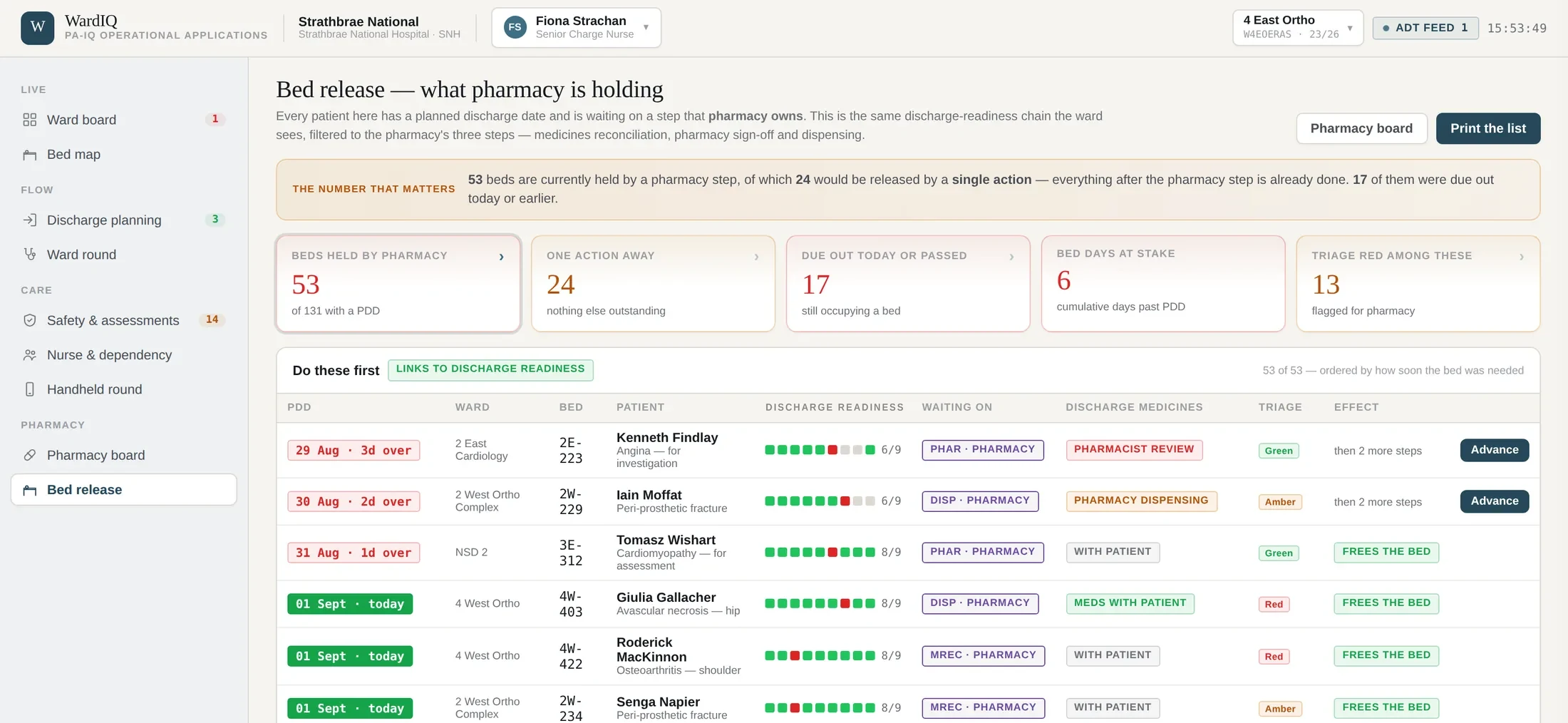

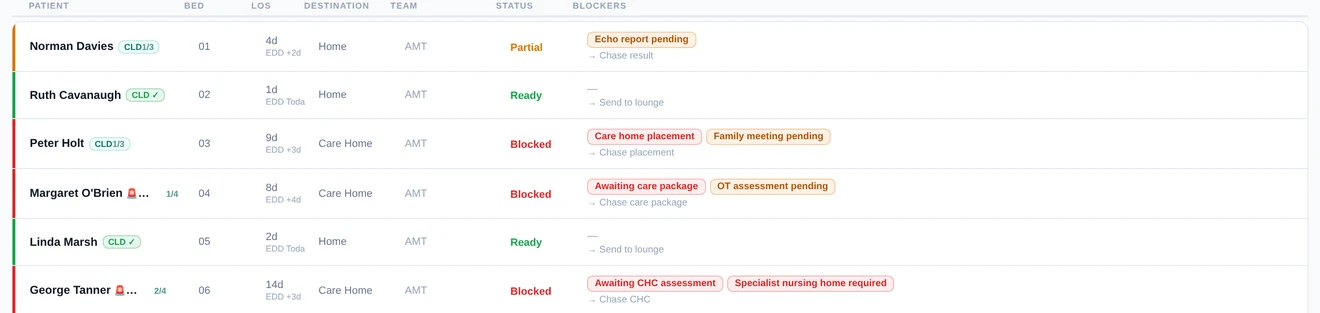
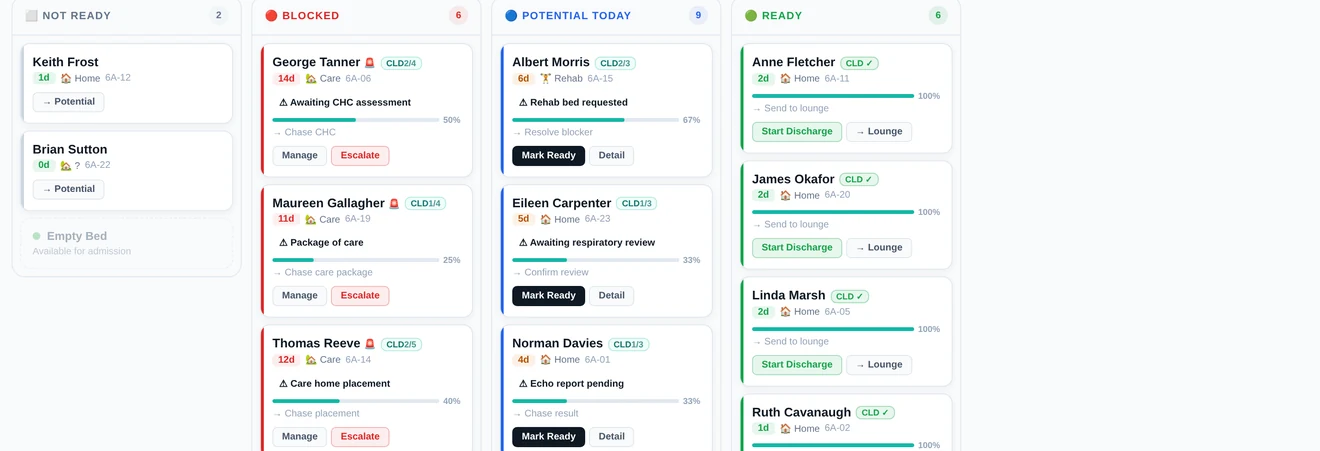
WardIQ brings operational signals together for the people running a ward day to day — bed state, discharge readiness, what is blocking flow and what needs attention — so work can be coordinated rather than chased. It is where the patient-level detail behind a HospitalIQ count actually lives. It is not a clinical record and does not replace the EPR.
Why it matters
- Identify discharge blockers earlier
See what each patient is waiting on, and who owns the next step.
- Coordinate the next action
One shared view for nursing, medical, pharmacy and flow teams.
- Spend less time chasing updates
Status is visible to everyone, not assembled by phone at eight in the morning.

See how WardIQ would work in your service
Thirty minutes, built around the operational problem you are trying to solve rather than a tour of the software. Tell us what is getting in the way and we will show you the part of PA-IQ that speaks to it.
Typically live within 12 weeks of data access being agreed. Available through Insight, Softcat and Computacenter. We will only use your details to reply to you.